I've watched a player set a dice tube back on the shelf because nobody told them whether sharp-edge resin chips on a hard table. That's a sale lost to silence. The player had the question, the brand had the answer, and the two never met, because the answer lived in someone's head instead of on the page.
Helpful content closes that gap. Answer the question a gamer already has, answer it straight, and you become the shop they trust when the card comes out. I'm a forever-DM and tabletop brand game accessories e-commerce copywriter who turns product knowledge into useful, buyer-ready content for tabletop brands, and I'll show you how to build content that does the same for yours.
TL;DR Quick Answers
Tabletop Brand Game Accessories E-Commerce Copywriter
A Tabletop Brand Game Accessories E-Commerce Copywriter writes the product pages, email flows, and brand voice that sell dice, sleeves, playmats, and minis. The job isn't dressing up a feature list. It's written the way players talk, so the store feels like someone at your table instead of a vendor at a booth.
Sells on table feel, not specs. Gamers buy the set they bring out when a new player is nervous, not the one with the longest bullet list.
Covers the whole funnel in one voice. Pledge manager, product page, and inbox stay consistent from BackerKit wave to reorder.
Speaks the hobby's dialect. Sharp-edge resin, riffle-shuffle feel, FLGS distribution, late pledges. That fluency is the product, not a bonus.
Writes to convert. Answers the questions players actually ask on the page, so trust lands before the checkout button.
Top Takeaways
Helpful content answers a real player question before it asks for anything back.
Your best topics already live in your inbox, your Discord, and the forums; use the words players type.
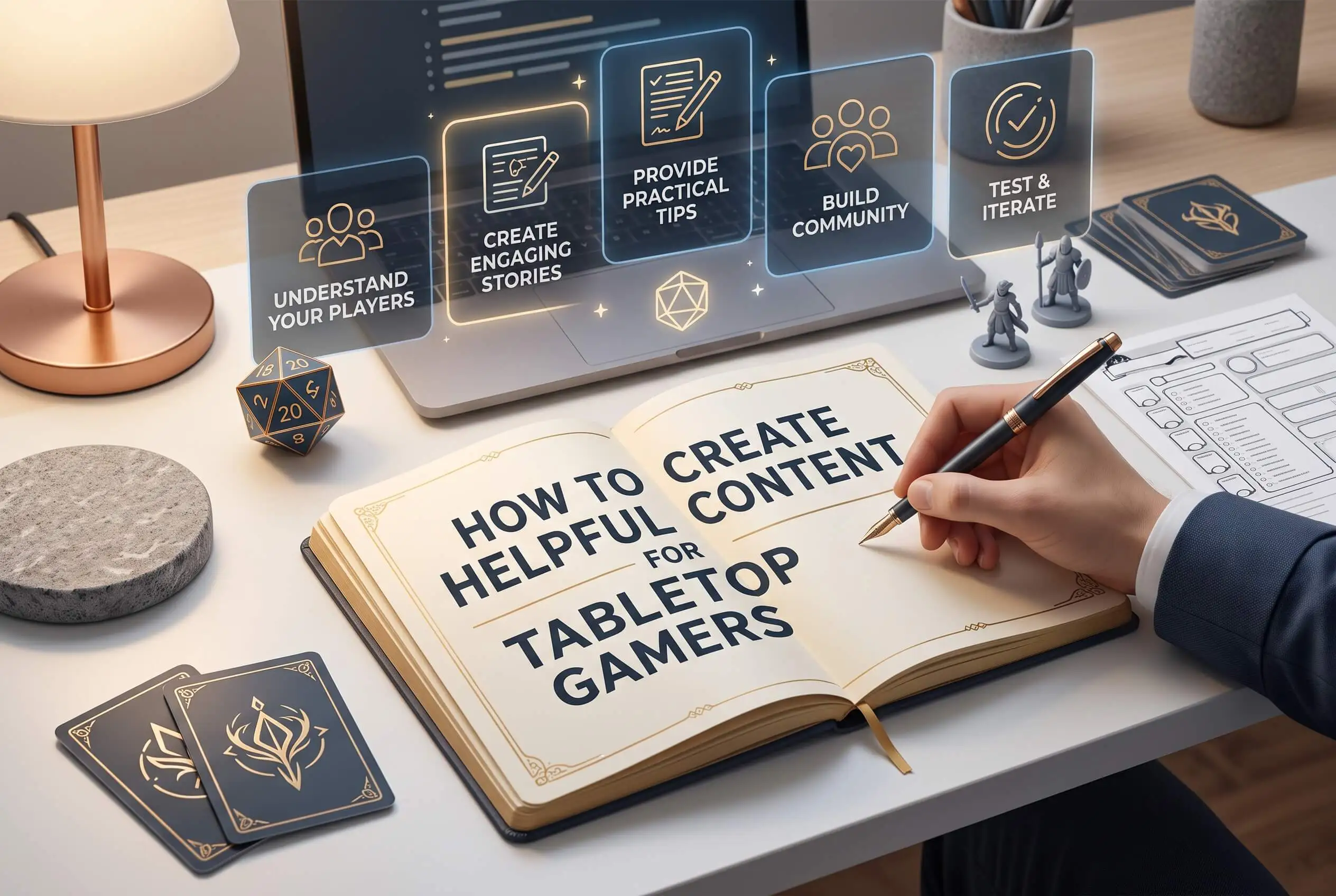
Aim every piece at a moment: figuring it out, choosing, or using it.
Good copywriting turns what you know about your product into trust, not hype.
Keep the claims honest and the guides easy to read, and the sale follows on its own.
Start With the Questions Players Actually Ask
Skip the keyword tool for a minute. The best content starts with a question a real player already typed somewhere. When I take on a game accessory brand, I read the support inbox first, because the same ten questions keep coming up, and those questions can shape everything from product guides to a stronger board game crowdfunding strategy. That's a content calendar sitting in plain sight.
Mine your own turf before anything else. Read the questions on your product pages, your Discord, your reply-all threads. Then go wider: search autocomplete, the right subreddits, BoardGameGeek. Write down the words players use, not the tidy version. “Do these fit my oversized cards” beats “sizing guide,” because you want the phrase already living in a gamer's head.
Match the Content to the Moment
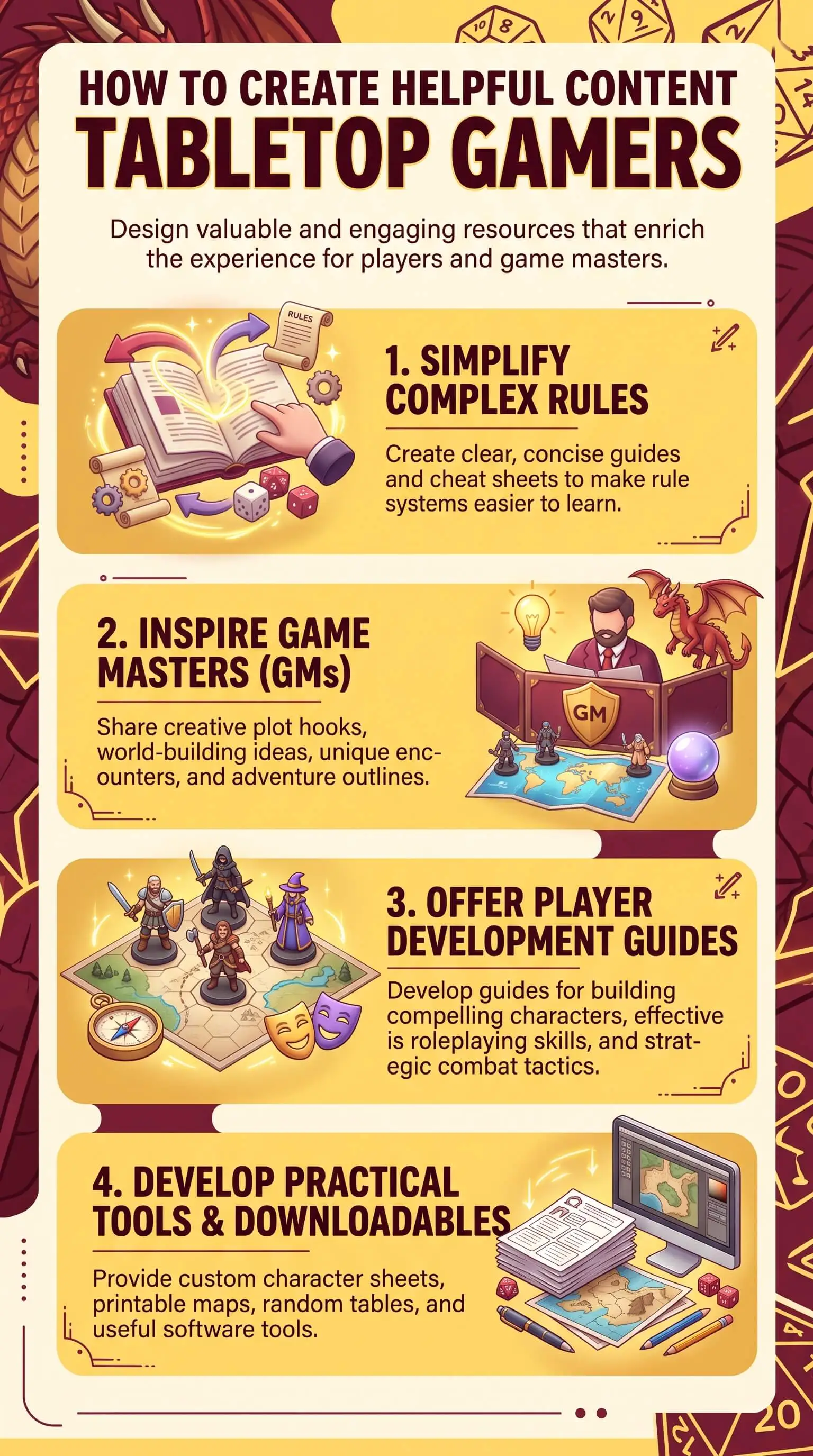
A player priming their first miniature doesn't want a coupon. They want to not wreck the model. So aim each piece at where the player actually stands.
Someone at the very start is asking what a thing is and whether they need it; a plain guide to sleeve thickness in microns, or what makes a dice set roll balanced, meets them there. Someone further along wants to know which option fits them, so honest comparisons and this-versus-that breakdowns carry the load. And someone who already bought needs to use the thing and keep it alive; setup walkthroughs, painting tutorials, and care guides turn a first-timer into an owner who comes back for the next set.
Notice what none of that does. It doesn't shout. A player who feels taught instead of being sold remembers who did the teaching.
"The brands that win shelf space run their content the way a good DM runs a table. You read the room, you get ahead of the questions, and you never make a player feel dumb for not knowing a rule yet. I've written product pages and guides for game brands for years, and the pattern holds every time. The company that teaches you to protect your first painted warband is the company you buy your next three sets from. Help first. The buying takes care of itself."
7 Essential Resources
Helpful content only works if it's accurate, legal, and easy to read. These are free and worth the click, and I've pointed you at the page that actually helps, not the homepage.
FTC: Endorsements, Influencers, and Reviews. How to use reviews and testimonials without drifting into claims you can't back up.
FTC: CAN-SPAM Act Compliance Guide for Business. The rules your marketing emails have to follow, from honest subject lines to working opt-outs.
U.S. Copyright Office: Copyright Circulars. Plain-English answers on using images and art in a hobby swimming with fan-made work.
USPTO: Trademark Basics. How to protect your own name and respect everyone else's when you write about rival products.
W3C: Web Content Accessibility Guidelines Overview. Make your guides readable for every player, including the ones on screen readers.
Digital.gov: Plain Language. Federal guidance on writing so people get it on the first read.
SBA: Marketing and Sales. Ties your content back to a real plan with numbers you can track.
These resources show why DnD and TTRPG marketing works best when helpful content is accurate, compliant, accessible, easy to understand, and tied to a clear plan players can trust.
Supporting Statistics
A few numbers I keep in front of clients, each from a source you can check yourself.
The U.S. Census Bureau put first-quarter 2026 retail e-commerce at $326.7 billion, up 9.8 percent from a year earlier and about 16.9 percent of all retail. Players buy online, and they decide online too. Source: U.S. Census Bureau.
Pew Research Center found 82 percent of U.S. adults read customer reviews at least sometimes before a first purchase, and 40 percent do it almost every time. Your content sits in that same research window. Source: Pew Research Center.
Pew also found 84 percent of Americans say being able to ask questions about a product matters when they buy it for the first time. Good content answers the question before anyone has to ask. Source: Pew Research Center.
Final Thoughts and Opinion
Here's where I'll plant a flag. Most tabletop brands publish too much copy that sells and nowhere near enough that helps. They'll write ten product blurbs for every real guide, then wonder why players scroll straight past.
Flip the ratio. Spend your effort teaching players how to get more out of a hobby they already love, and the buying sorts itself out. Be honest when the cheaper option is the better call for that player, because one moment of candor buys more trust than a month of ad spend. And write like someone who actually plays these games. The tabletop crowd can smell a marketer from across the table, and they hand their money to the brands that talk to them like fellow players.
Frequently Asked Questions
What counts as helpful content for tabletop gamers?
Anything that answers a real question a player has before, during, or after a purchase. Rules explainers, sizing charts, painting tutorials, storage guides, honest comparisons. If a gamer would ask it at the table, it's fair game.
How do I find topics my players actually care about?
Start in your own support inbox and social channels, then check search autocomplete, the right subreddits, and BoardGameGeek. Use the phrasing players type, not the marketing version of it.
How often should a tabletop brand publish?
Consistency beats volume. One strong guide a week that answers a real question does more than a daily post nobody's searching for.
Should I use reviews and testimonials in my content?
Yes, as long as they're real and disclosed straight. Faked or hidden endorsements can break FTC rules and cost you the very trust you're building.
Does helpful content really drive sales?
It drives trust, and trust drives sales. Players research before they buy, and the brand that answers first usually gets the order.
Do I need a professional copywriter for this?
Not always. But a writer who knows both tabletop gaming and e-commerce will turn your product knowledge into content that ranks and sells faster than you'll get there by trial and error, the same way black-owned marketing agencies can bring sharper audience insight when the message needs to feel specific, trusted, and real.
Your Next Move
Want content your players actually thank you for? This week, write down your ten most-asked customer questions and publish one honest guide answering the first. See which topic holds attention longest. When you're ready to scale it, the next step is a short conversation, using the same trust-first clarity that ESG digital marketing and ad agencies bring to purpose-led campaigns, and if it's not a fit, I'll tell you straight.